
LET'S MAKE A MOLDOVAN MARTISOR!
🌍✨ Dear International Students of “STEAMing Across Borders”,
With great joy and excitement, we invite you to discover and experience one of the most beautiful cultural traditions of 🇲🇩 Moldova and 🇷🇴 Romania — the art of creating and wearing the Mărțișor ❤️🤍
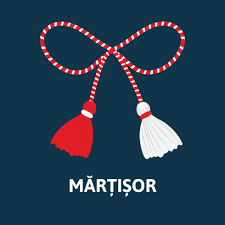
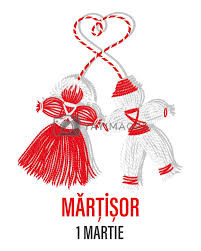
📅 On March 1st, people in our countries celebrate the arrival of spring by offering and wearing mărțișoare — small handmade symbols tied with a red and white thread.
🔴⚪ The two colors are deeply meaningful: Red symbolizes love, vitality, courage, and the energy of life. White represents purity, new beginnings, and hope. Together, they embody 🌱 renewal, friendship, harmony, and the rebirth of nature.
🎥💡 Our talented students from Moldova have created special video tutorials just for you!
Through these step-by-step guides, you will learn:
🧵 How to twist the traditional red-and-white thread
🎀 How to design your own symbolic ornament
🎨 How to add creativity while respecting cultural meaning
🌍 How to connect tradition with innovation — in true STEAM spirit!
📸🧶 Your Challenge:
1️⃣ Watch the tutorials carefully.
2️⃣ Create your own Moldovan Mărțișor.
3️⃣ Wear it proudly for one day, any day in March.
4️⃣ Share photos of the making process ✂️, your finished creation 🎀and you wearing your Mărțișor 🤍❤️
📌 Please upload your pictures on our Padlets so we can all admire your international Mărțișoare gallery!
🌸 This is more than a craft activity. It is an act of intercultural dialogue, global friendship, and shared creativity. By participating, you become part of a living tradition that connects generations and countries across borders. 🌎🤝 We cannot wait to see how you reinterpret this symbol through your own cultural lens and imagination!
WHAT IS A MARTZISHOR?
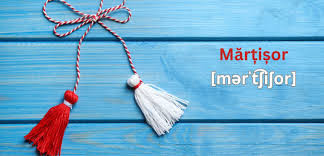
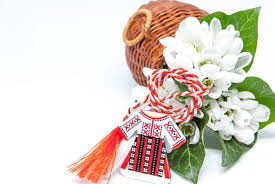
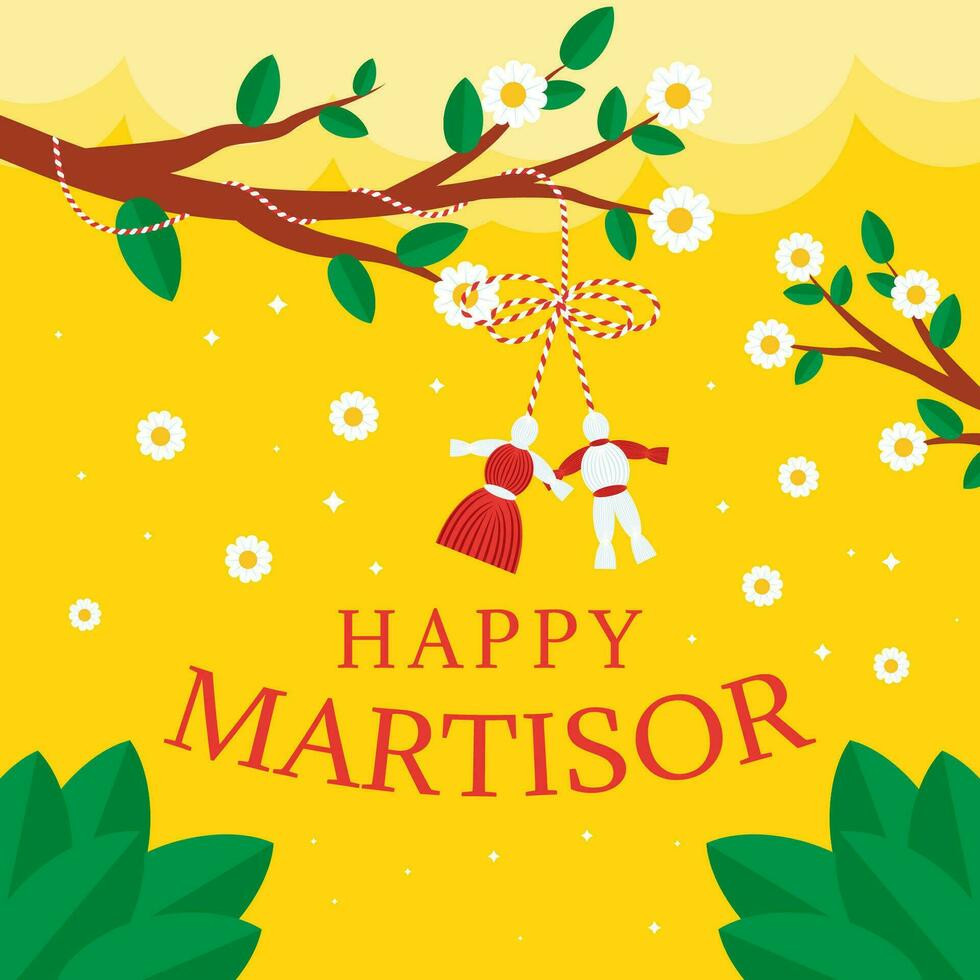
A Mărțișor (pronounced mar-tsee-shor) is a small, traditional token—often a brooch, bracelet, or trinket—tied with an intertwined red and white cord, exchanged to mark the arrival of spring on March 1st. The word is a diminutive of martie (March), literally meaning "little March" and is a cherished symbol of renewal, friendship, and affection.
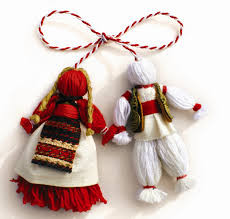
While historically, men gave them to women as a token of admiration, it is now commonly exchanged between friends, family, and colleagues, with women also giving them to men.

WHERE IS IT WORN?
WHAT DOES IT SIGNIFY?
- The Colors: The red and white thread is central. Red represents life, passion, and fire, while white symbolizes purity, wisdom, and snow. Together, they represent the transition from winter (cold/white) to spring (warmth/red).
- Symbolism: It is believed to bring good luck, health, and protection against evil spirits or the "evil eye" for the coming year.
- Trinkets: Modern Martisoare are often attached to small symbols like four-leaf clovers, ladybugs, chimneysweeps, or flowers (especially snowdrops).
- Duration: It is typically worn throughout the entire month of March.
- End of Tradition: Some wear it until they see the first blooming tree, the return of swallows/storks, or up to March 9th (a, 40 Saints holiday) or March 31st.
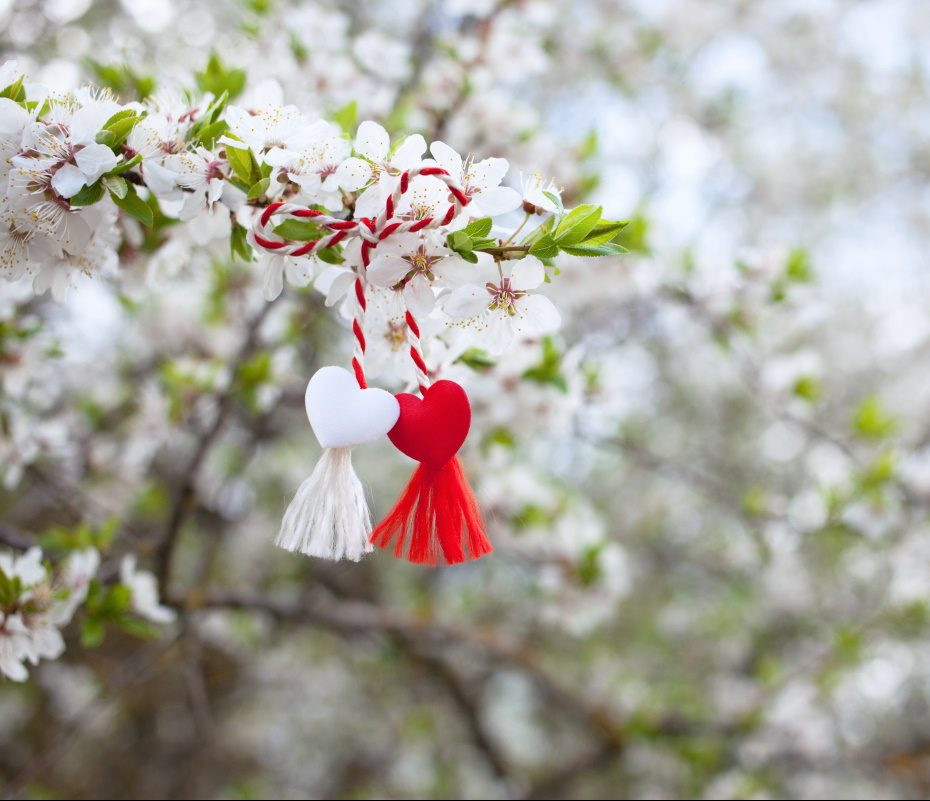
- Final Action: Once removed, it is customary to tie the Martisor to a blooming tree branch to bring prosperity, or to drop it into a river.
WHAT IS THE LEGEND BEHIND IT?
- The Sacrifice of Lady Spring: As the legend goes, Lady Spring was trying to help a delicate white snowdrop bloom through the snow. A furious Winter Spirit sent a sharp frost to stop her, piercing Lady Spring's finger. Her warm blood dripped onto the snowdrop, causing the snow to melt and allowing Spring to defeat Winter. Therefore, red represents her blood/sacrifice, and white represents the snow/snowdrop.
- The Sun and the Dragon: The Sun came down to Earth disguised as a beautiful girl, but was kidnapped by a dragon, plunging the world into darkness. A brave young man fought the dragon for three seasons (summer, autumn, winter) to save her. He was injured in the battle, and his blood fell on the white snow, which is why the thread is red and white.
Creating a Mărțișor becomes a STEAM activity when it is intentionally designed as an interdisciplinary learning experience, not just a craft task.
1️⃣ S – Science
🔬Students explore:
-
🌱 Seasonal change & spring equinox (why March 1 marks renewal in Eastern Europe)
-
🧵 Material properties (fiber strength, elasticity, natural vs. synthetic threads)
-
🎨 Color symbolism and basic color psychology
They investigate natural cycles, climate, and biological rebirth — linking culture with environmental science.
2️⃣ T – Technology 💻Students use:
-
🎥 Digital video tutorials created by Moldovan peers
-
📱 Padlet platforms for documentation and sharing
-
📸 Digital photography to document process stages
They engage in digital literacy, media production, and global online collaboration.

3️⃣ E – Engineering 🧩Making a Mărțișor involves:
-
Structural thinking (How will it hold together?)
-
Knotting techniques and tension control
-
Prototype → test → improve cycle
-
Designing a wearable micro-object
This is applied micro-engineering and design thinking.
4️⃣ A – Arts
🎨This is obvious but essential:
-
Aesthetic design
-
Symbolism
-
Cultural heritage expression
-
Creative reinterpretation
Students integrate tradition with innovation, which is central to STEAM philosophy.
5️⃣ M – Mathematics 📐Hidden but present:
-
Symmetry
-
Pattern repetition
-
Ratio of red/white thread
-
Measurement of length
-
Geometric balance in ornament structure
Even simple twisting follows mathematical rhythm and proportional reasoning.
When structured intentionally, this activity develops:
✔ Intercultural competence
✔ Design thinking
✔ Fine motor coordination
✔ Digital collaboration skills
✔ Systems thinking (culture + nature + design + technology)
✔ Global citizenship education